-
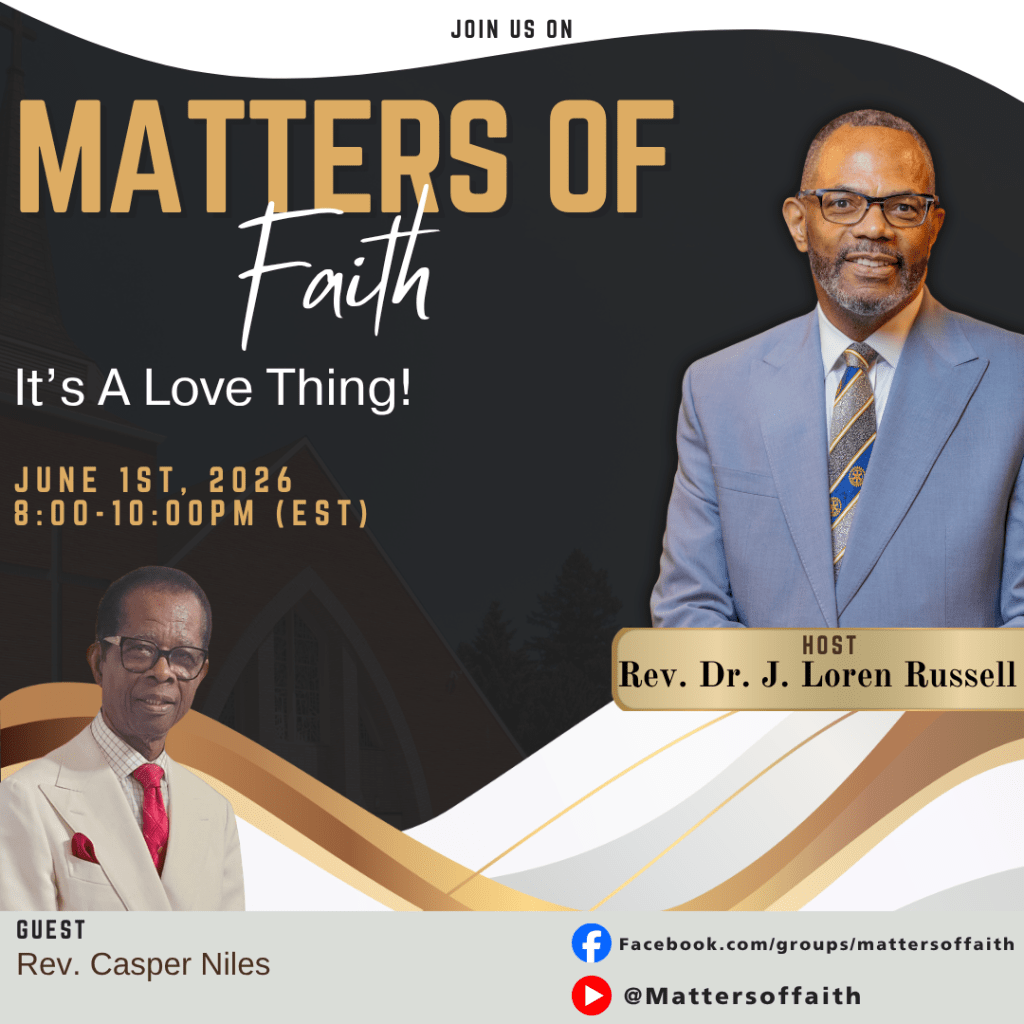
It’s A Love Thing
Reverend J. Loren Russell
I Corinthians 13:1-13 NKJV
Though I speak with the tongues of men and of angels, but have not love, I have become sounding brass or a clanging cymbal. And though I have the gift of prophecy, and understand all mysteries and all knowledge, and though I have all faith, so that I could remove mountains, but have not love, I am nothing. And though I bestow all my goods to feed the poor, and though I give my body to be burned, but have not love, it profits me nothing. Love suffers long and is kind; love does not envy; love does not parade itself, is not puffed up; does not behave rudely, does not seek its own, is not provoked, thinks no evil; does not rejoice in iniquity, but rejoices in the truth; bears all things, believes all things, hopes all things, endures all things. Love never fails. But whether there are prophecies, they will fail; whether there are tongues, they will cease; whether there is knowledge, it will vanish away. For we know in part and we prophesy in part. But when that which is perfect has come, then that which is in part will be done away. When I was a child, I spoke as a child, I understood as a child, I thought as a child; but when I became a man, I put away childish things. For now we see in a mirror, dimly, but then face to face. Now I know in part, but then I shall know just as I also am known. And now abide faith, hope, love, these three; but the greatest of these is love.
I was in a meeting last week discussing how to reach young people with a transformative message. We were talking from psycho-social, legal, judicial, and the spiritual perspective. My comments were based on my understanding of the human heart and its desire for and its ability to respond to genuine love no matter the psycho-social, legal or judicial perspective. I made it clear that genuine love is not merely inspirational, but uniquely transformational that cuts across all psychological, sociological, economic, cultural, or religious persuasion.
In Paul’s epistle to the Corinthian church, he points out that the things the church had begun depending on to strengthen the faith of the congregation were essentially useless if they were not undergirded with love. If he could say that about the gifts given to the saints of God in the church, the same can be said of the gifts given outside the church. God has provided knowledge and gifts that allow us to care for the physical, social, and mental health of each other. That’s why I believe in the field of psychology. I believe in the field of sociology. I also believe in science. But without love, none of them individually or collectively can make anyone whole. Collectively, they provide two legs to what is intended to be a three-legged stool; mental, physical, and spiritual. All too often, the spiritual leg is left out.
When we add the influence of God’s love in our lives, we begin to cooperate with His instruction and allow Him to fully determine our direction and destination. It may not happen all at once, but the transformation is permanent. It shows up in the psychological as well as the sociological life of the individual. It also adds dimensions of endurance that never fails. You don’t have to take my word for it because I am just paraphrasing Paul who said; Love suffers long and is kind; love does not envy; love does not parade itself, is not puffed up; does not behave rudely, does not seek its own, is not provoked, thinks no evil; does not rejoice in iniquity, but rejoices in the truth; bears all things, believes all things, hopes all things, endures all things. Love never fails.
Enough said.
Be Blessed!
-
Jude 1:3-4, 16-22 NKJV
3 Beloved, while I was very diligent to write to you concerning our common salvation, I found it necessary to write to you exhorting you to contend earnestly for the faith which was once for all delivered to the saints. 4 For certain men have crept in unnoticed, who long ago were marked out for this condemnation, ungodly men, who turn the grace of our God into lewdness and deny the only Lord God and our Lord Jesus Christ.
16 These are grumblers, complainers, walking according to their own lusts; and they mouth great swelling words, flattering people to gain advantage. 17 But you, beloved, remember the words which were spoken before by the apostles of our Lord Jesus Christ: 18 how they told you that there would be mockers in the last time who would walk according to their own ungodly lusts. 19 These are sensual persons, who cause divisions, not having the Spirit. 20 But you, beloved, building yourselves up on your most holy faith, praying in the Holy Spirit, 21 keep yourselves in the love of God, looking for the mercy of our Lord Jesus Christ unto eternal life. 22 And on some have compassion, making a distinction; 23 but others save with fear, pulling them out of the fire, hating even the garment defiled by the flesh.
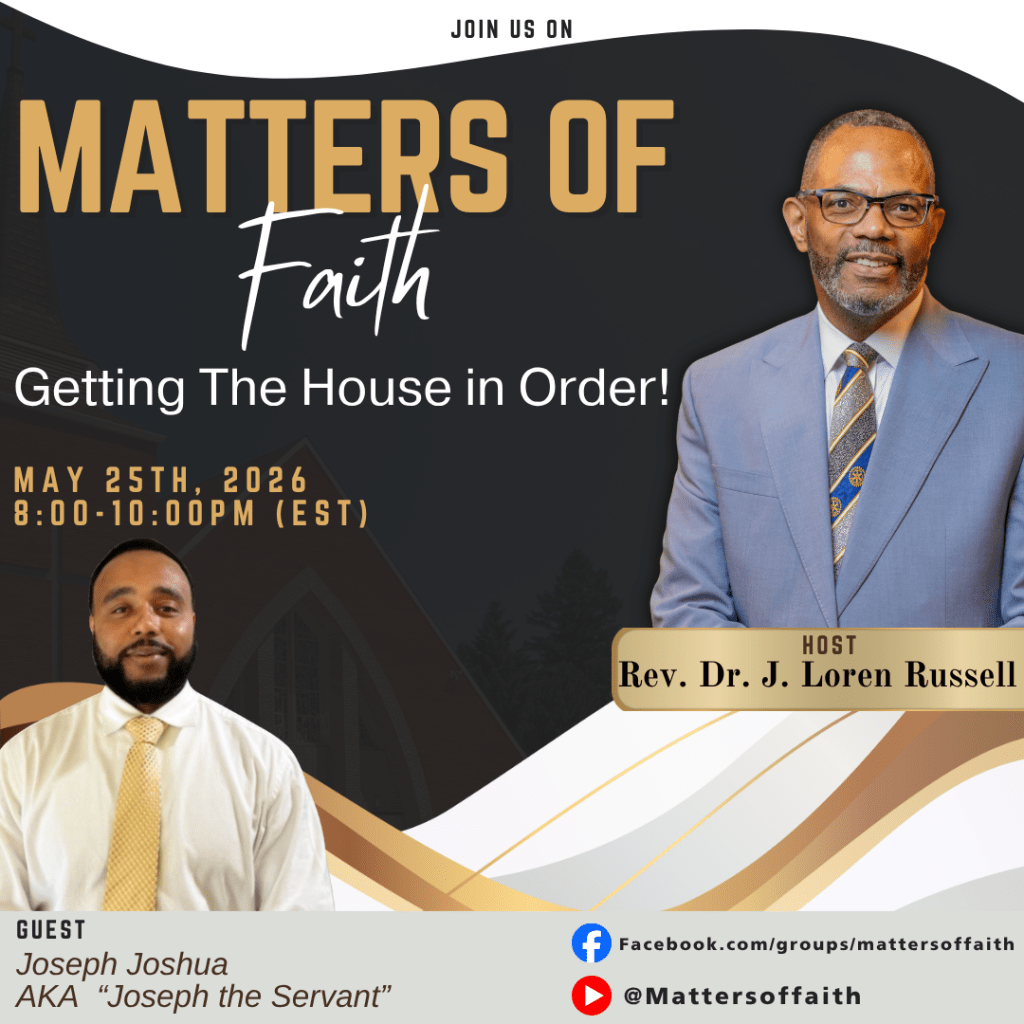
There were people in the early church who were so disruptive that they caused the leaders to edit their intended sermons just to address them. An example of this is found in the epistle of Jude. Jude was the brother of James and the brother of Jesus. He told his readers that he wanted to write to them about the salvation they all shared, but he was compelled to write to them about some ungodly people who had crept or wormed their way into the church. Although they were in the church, they denied God and the Lord Jesus Christ, teaching that God’s Grace permitted them to live immorally.
Jude’s initial intent was to address the common salvation of all believers, but the negative influence was so severe that he had to address it to set the house in order. He was blunt and told the church that some ungodly people crept their way into the church, looking like sheep, but were in reality unthinking animals, doing whatever they were instinctively inclined to do. He said they defied authority, scoffed at angels, and were as bad as the followers of Cain who killed his brother Abel; as bad as Balaam who deceived people for money; and like Korah, who fought against Moses and died in the wilderness. He compares them to dangerous reefs where ships crash, and shameless shepherds who cared nothing about the sheep, only themselves. He says they are like dark clouds that bring no rain, dead trees that bear no fruit, and wondering stars that are hopelessly and forever shrouded in darkness.
It may not have been what the people wanted to hear, but it had to be said. Jude was not being derogatory or using vindictive words because he was angry. Jude was telling his congregation how to identify the ungodly among them. But, he did not use spiteful or unkind words that could incite dehumanizing actions against those who had crept into the church. What I like about Jude is that he understands that “all have sinned and fallen short of the glory of God.” He understands that the Lord desires that “no man perish, but that all have ever lasting life.” He tells his readers what they are to do with and for these creeps. They are to build each other up in their most holy faith, to pray in the power of the Holy Spirit, and wait on the mercy of Jesus Christ.
“On some,” he says “have compassion, making a distinction,” which is to say, make a notable difference. He then says, “but others save with fear, pulling them out of the fire.” Imagine that, Jude tells them to brave their fear of the creeps and get down into the fire if necessary to rescue them. He tells them to “hate even the garment defiled by the flesh.” I interpretthat to mean they are to love the person but hate their evil deed.
Because they were unable to be blunt with love without help, Jude closes his epistle by encouraging his readers with what I consider to be the most inspiring benediction in scripture. Jude says, “Now unto him that is able to keep you from falling, and to present you faultless before the presence of his glory with exceeding joy, To the only wise God our Saviour, be glory and majesty, dominion and power, both now and ever. Amen.”
What gets the house in order is that both the faithful and the creeps were directed to Jesus Christ, the architect of love. If we keep His ability to keep us from falling in mind and in our spirit, we will be able to encourage the faithful, and identify, minister to, and lead, even the creeps in the church to salvation.
Be Blessed!
-
Acts 8:36-38 NKJV
Now as they went down the road, they came to some water. And the eunuch said, “See, here is water. What hinders me from being baptized?”Then Philip said, “If you believe with all your heart, you may. ”And he answered and said, “I believe that Jesus Christ is the Son of God.”So he commanded the chariot to stand still. And both Philip and the eunuch went down into the water, and he baptized him.
“Teamwork makes the dream work!” This familiar statement is often used to demonstrate the effectiveness of collaborative verses individual efforts. In like manner, the scripture is an encouragement for us from the heart of the Lord to be supportive of one another so that greater success can be achieved.
Sometimes we get distracted comparing what the Lord has given to us with what He has given to others. The scripture tells us to work together so that our camaraderie brings mutual success to our labor.
One can lift the other if a fall occurs; two can warm each other through the cold; two can overcome their enemy when confronted. Our gifts complement each other when we share them. Sometimes we are the eunuch. We are searching, questioning, and trying to understand. Sometimes we are Philip. We are sent, positioned, and called to help someone else find their way.
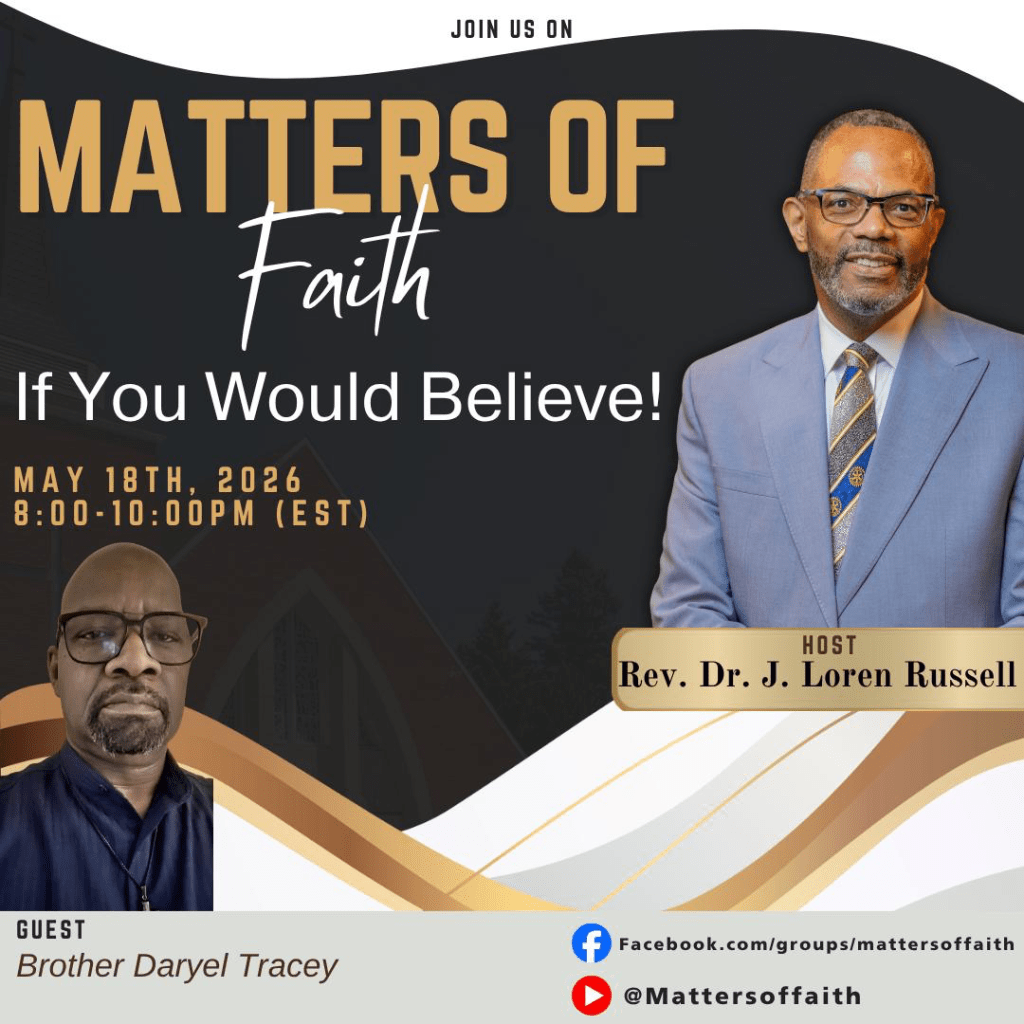
Collaboration allows two people to pull together to accomplish great things. Our victories are much greater when we work together. Another thing to consider is when the Lord is in the midst, a dynamic duo becomes an incomparable trio, and all things are possible. In every case, the turning point is the same: If you would believe. For the Eunuch, right there, on that roadside, in that moving chariot, the eunuch made his confession: “I believe that Jesus Christ is the Son of God.” No long checklist. No impossible requirement. Just one condition…, belief.
What’s holding you back? When belief rises, nothing can hinder what God has set in motion. When you get over your doubt, overcome your fear, stop making comparisons, release the weight of your past, you will realize the answer has not changed. “If you believe with all your heart, you may.”
Be Blessed!
-
Good morning.
Rev. Dr. J. Loren Russell’s What’s App account was hacked. Please delete and disregard anything from him requesting money.
Rev. Dr. J. Loren Russell