-
Reverend J. Loren Russell
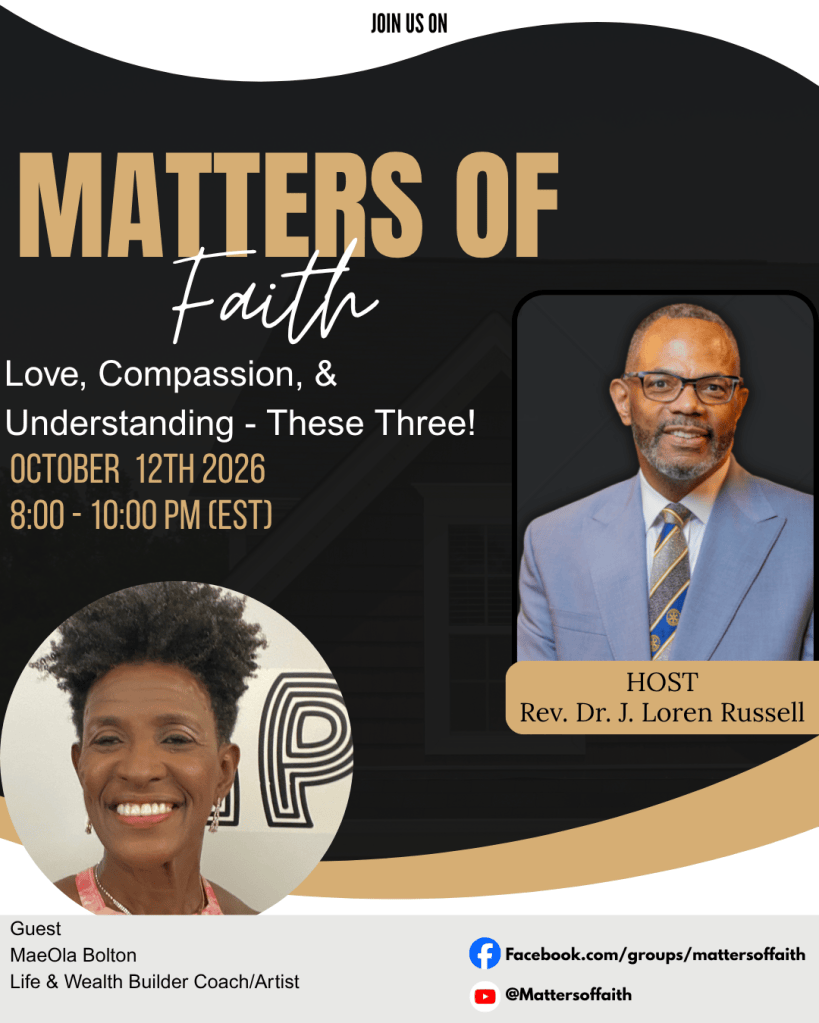
Scripture: 1 Corinthians 13:13 (NKJV)
“And now abide faith, hope, love, these three; but the greatest of these is love.”
We live in a world where people are quick to speak, quick to judge, and often slow to listen. We want others to understand us, but we are not always willing to understand them. We desire compassion when we are hurting, patience when we are struggling, and forgiveness when we make mistakes. And yet, we sometimes struggle to extend those same courtesies to others.
In 1 Corinthians 13, the Apostle Paul reminds us that love is more than a feeling, a word, or a good intention. Love must be demonstrated through our actions. Paul was writing to a divided church whose members possessed spiritual gifts, knowledge, faith, and abilities, yet struggled to live together in harmony. He wanted them to understand that even the greatest gifts mean little when they are not accompanied by love.
We can be knowledgeable and still be insensitive. We can be right and still be unkind. We can win an argument and lose a relationship. The real measure of our character is not simply what we know, but how we use what we know to treat others.
Paul declares that love is patient and kind. These qualities remind us that love is revealed through our behavior. Patience gives others room to grow, while kindness allows us to speak truth without intentionally causing harm. Love does not demand its own way, boast about its accomplishments, or keep a record of every wrong committed against it.
Then there’s the importance of compassion. Compassion looks beyond a person’s behavior to consider the person behind it. Everyone we encounter is carrying something. Some are dealing with grief, disappointment, rejection, or battles they have never shared with anyone. We may see their frustration without knowing their pain. We may notice their mistakes without understanding their struggles.
Compassion does not mean excusing harmful behavior or abandoning accountability. It means correcting without cruelty, establishing boundaries without hatred, and remembering that every person has dignity. Before responding in anger or rushing to judgment, we should ask ourselves, “What might this person be going through, and how can I respond in a way that reflects the love of Christ?”
Understanding takes compassion a step further. It requires us to listen before judging and to recognize that people may see the same situation differently because of their experiences, backgrounds, and circumstances. Understanding does not require agreement. We can disagree with someone’s opinion without devaluing the person who holds it. We can stand firmly in our convictions while remaining humble enough to learn something new.
Paul reminds us that we know only in part. That truth should make us careful about assuming that our perspective is the only perspective that matters. Sometimes we judge people without knowing their stories, criticize their decisions without understanding their circumstances, and give up on them without allowing room for growth.
The same grace we desire from others is the grace we must learn to extend.
Ultimately, Jesus Christ is our greatest example of love, compassion, and understanding. He reached out to the rejected, showed compassion to the suffering, and offered forgiveness to sinners. At Calvary, He demonstrated the depth of God’s love by giving His life for our salvation. His resurrection reminds us that love is not weakness; it is a powerful expression of God’s character and redemptive purpose.
Paul concludes that faith, hope, and love remain, but the greatest of these is love. Faith anchors us in God, hope sustains us through difficult seasons, and love guides how we live with one another.
I challenge you today to examine your hearts. Do people experience love when they encounter you? Are you compassionate toward those who struggle? Are you willing to understand people whose experiences differ from your own?
We may not be able to change the entire world in a day, but we can change the atmosphere in every room we enter by choosing patience over irritation, compassion over indifference, and understanding over judgment. This is very doable if we remember that love is not simply something we talk about, it is something we practice; remember that compassion is not merely something we feel, but something we demonstrate; and remember that understanding is not something we demand from others alone, it is something we must pursue ourselves.
I pray that our God will help us love beyond our differences, show compassion beyond our comfort zones, and seek understanding before passing judgment.
Be Blessed!
-
Reverend J. Loren Russell
Ephesians 2:1–10 CEV
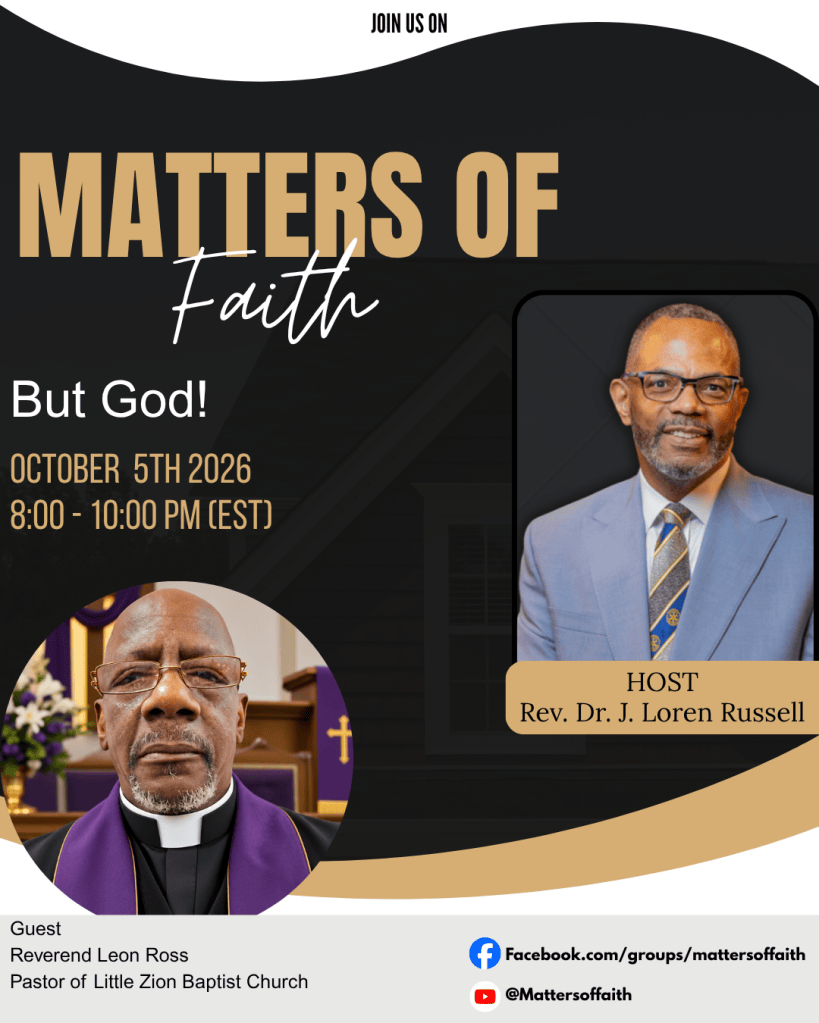
“In the past you were dead because you sinned and fought against God. You followed the ways of this world and obeyed the devil. He rules the world, and his spirit has power over everyone who doesn’t obey God. Once we were also ruled by the selfish desires of our bodies and minds. We had made God angry, and we were going to be punished like everyone else. But God was merciful! We were dead because of our sins, but God loved us so much he made us alive with Christ, and God’s gift of undeserved grace is what saves you. God raised us from death to life with Christ Jesus, and he has given us a place beside Christ in heaven. God did this so in the future world he could show how truly good and kind he is to us because of what Christ Jesus has done. You were saved by faith in God, who treats us much better than we deserve. This is God’s gift to you, and not anything you have done on your own. It isn’t something you have earned, so there is nothing you can brag about. God planned for us to do good things and to live as he has always wanted us to live. This is why he sent Christ to make us what we are.”
If it were not for the love of God, none of us would be worth anything. In fact, we would be walking dead, looking for a grave to lay down in.
These are not my words. Paul tells the Ephesian church that we were all dead because of our sins. But God brought us to life through His undeserved grace. In other words, we did not then, and we do not now, deserve His grace. The reason we were then, and are now, eligible to be made alive is not because we deserve it, but because the Lord is truly good and kind to us because of what Christ Jesus has done.
Notice the conjunction, or antithesis, “but.” It serves as a directional signal. It changes the direction of the conversation and points us toward unmerited favor. We were dead—but God! We were sinners—but God! We were undeserving—but God! We were headed in the wrong direction—but God!
Although we do not deserve God’s grace, He extends it to us anyway. The Apostle John told us, “For God so loved the world that He gave His only begotten Son, that whoever believes in Him should not perish…” And here we go again—‘but’ has everlasting life.”
That “but” symbolizes God’s grace, God’s favor, and God’s love for undeserving people who, by no merit of their own, are pardoned in this life and given a place in the Lord’s Kingdom yet to come.
When we see or say “But God,” it should force us to recognize both our unworthiness and the Lord’s sovereignty over all things—including us. The truth is that we cannot take credit for what only God could do. We didn’t save ourselves and we didn’t earn His grace. We didn’t deserve His mercy. But God!
I don’t know about you, but I thank God every day for the opportunity to look at my own life and say:
“BUT GOD!”
If God has ever stepped into your situation and changed the direction of your story, you ought to be able to say it with me:
BUT GOD!
Be Blessed!
-
Reverend J. Loren Russell
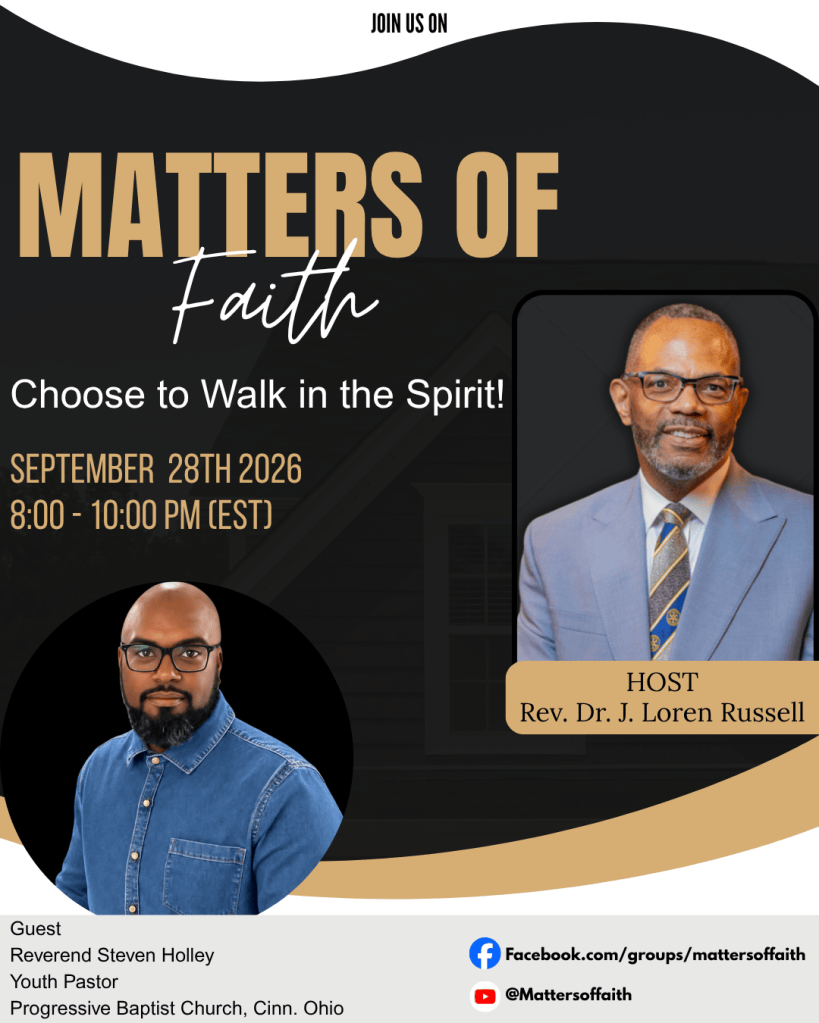
Romans 8:1–2 NKJV
“There is therefore now no condemnation to those who are in Christ Jesus, who do not walk according to the flesh, but according to the Spirit. For the law of the Spirit of life in Christ Jesus has made me free from the law of sin and death.”
“Therefore” means “as a result of.” In Romans 8:1, it points us back to the central message of Romans chapters 5–7, where Paul makes clear that believers in Christ face no condemnation because of Christ’s death on their behalf (Romans 5:12–21).
Just to be clear, in chapter 6 Paul declares that “the wages of sin is death” (6:23), and 1 Corinthians 15:56 reminds us that “the sting of death is sin, and the strength of sin is the law.”
Then, in Romans 7:24–25 (NKJV), Paul asks a penetrating question and gives us a liberating answer:
“O wretched man that I am! Who will deliver me from this body of death? I thank God – through Jesus Christ our Lord!”
Paul understood the struggle between wanting to please God and the sinful nature that continued to pull at him. But through Jesus Christ, he discovered that his struggle did not have to determine his destiny.
Therefore, then, and so, for that reason, as a result — Paul could now declare emphatically in Romans 8:1 that those who are in Christ Jesus are no longer condemned.
Walking in the Spirit does not mean that we will never experience the consequences of our sinful choices. Rather, it means that through Christ, we have been delivered from the condemnation of sin and empowered by the Holy Spirit to live a life that pleases God. What I like most about walking in the Spirit of the Lord is that it is a choice.
Every day, we have a choice about how we will walk. We can walk according to the flesh, allowing our sinful desires to control our decisions, attitudes, and actions. Or we can walk according to the Spirit and allow the Holy Spirit to lead, guide, and empower us.
Paul makes that choice clear in Romans 8:13:
“If you live according to the flesh you will die; but if by the Spirit you put to death the deeds of the body, you will live.”
The Spirit gives us the power to say “no” to what is pulling us away from God and “yes” to what brings us closer to Him. When you walk in the Spirit, you are choosing a life that pleases God.
My objective today is simple: I want to encourage you to choose to walk in the Spirit. Choose the Spirit when your flesh wants to react. You will discover that the same Spirit who saved you is the same Spirit who strengthens you to live for God. So, choose to walk in the Spirit.
Be Blessed!
-
Reverend J. Loren Russell
Matthew 1:5–6, 16 NKJV
“Salmon begot Boaz by Rahab, Boaz begot Obed by Ruth, Obed begot Jesse, and Jesse begot David the king. David the king begot Solomon by her who had been the wife of Uriah. And Jacob begot Joseph the husband of Mary, of whom was born Jesus who is called Christ.”
“How sad to see a filled church of empty people trying to overflow.”
Those words remind us that sometimes the greatest barrier to experiencing the fullness of God’s grace is not what God is withholding from us, but what we have convinced ourselves we are unworthy to receive.
We can become prisoners of our own past, allowing our place of birth, how we were raised, the schools we attended, the mistakes we made, the failures we experienced, or the labels others placed on us to determine what we believe is possible for our lives. We write ourselves off before we ever give God an opportunity to write our next chapter.
But Matthew’s genealogy of Jesus reminds us that God has never been limited by human expectations.
Look at the people God allowed to become part of the lineage of Jesus. Rahab had a past; Ruth was a foreigner and a Moabite; David was a man who committed adultery, lied, and arranged for another man’s death; Solomon experienced tremendous blessing but also made serious choices that brought consequences into his life. Yet their failures did not prevent God’s purposes from moving forward.
Matthew does not hide the complicated parts of their stories. Their histories are included in the genealogy leading to Jesus because God was showing that your history may be part of your story, but it does not have to be the end of your story.
Perhaps that’s where some of us are today. We have allowed our past to become a prison. We tell ourselves, “Because I came from here, I can’t go there.” “Because I did that, God can’t use me.” “Because I failed, I don’t deserve another opportunity.” But God says something different. Through Jeremiah (29:11 NKJV), God spoke to Israel while they were living in captivity:
“For I know the thoughts that I think toward you, says the Lord, thoughts of peace and not of evil, to give you a future and a hope.”
God did not deny their circumstances. He knew they were in captivity. But He also knew their captivity wasn’t their conclusion. They had a future. They had hope. And so do you.
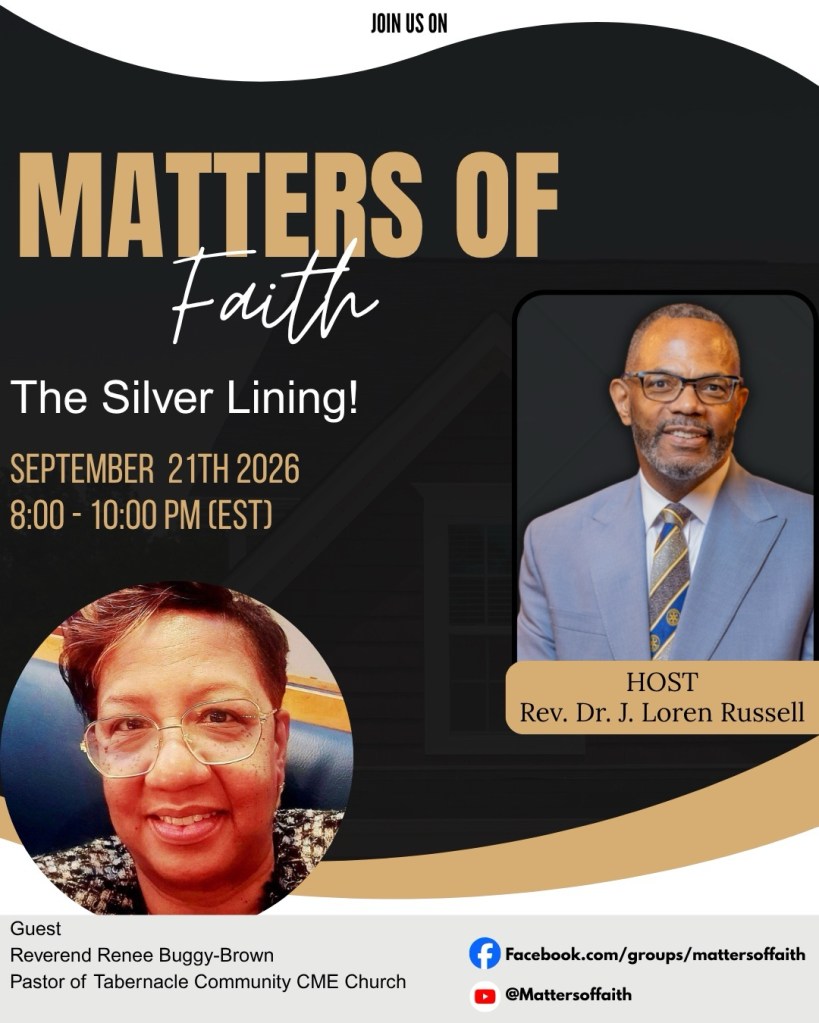
There may be a dark cloud over your life right now; a cloud of disappointment, regret, rejection, failure, or uncertainty. But don’t assume that because you see the cloud, there is nothing beyond it.
There is a silver lining.
And for the believer, the silver lining is not simply that circumstances will change. The silver lining is the believers assurance that God has a prepared future that extends beyond circumstances and situations. They might see the cloud but they keep looking for the silver lining. Don’t let your past keep you from believing in the future God has prepared for you. There is silver in every cloud. And that silver lining has a name…, Jesus.
Be Blessed!